
Your body does extraordinary things during pregnancy, and after birth it faces a new challenge: recovering while caring for a newborn. Many new mothers feel prepared for pregnancy changes but unsure what to expect once the baby arrives.
Understanding what is happening physically can help you make informed choices about your recovery and when to seek additional support.
What Happens to Your Body After Birth
The postpartum period involves significant physical adjustment. Some of the most common changes include:
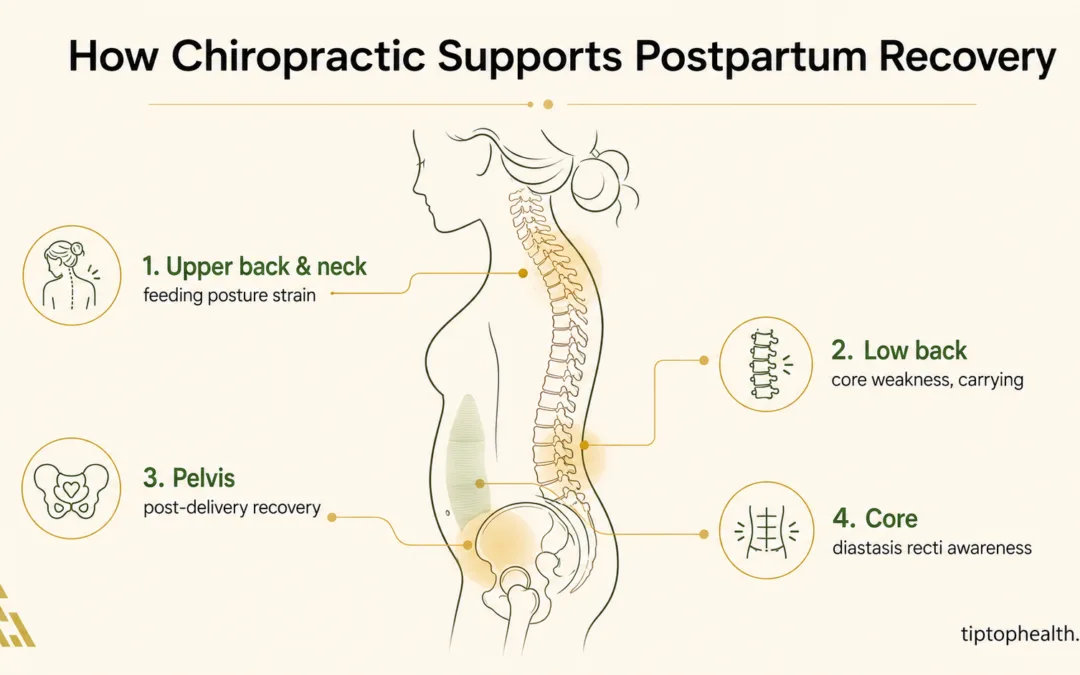
Core and pelvic floor. The muscles and connective tissues that supported your growing belly during pregnancy need time to recover. Diastasis recti, a separation of the abdominal muscles, is common and can affect stability and comfort. Pelvic floor rehabilitation may also be relevant during this phase of recovery.
Posture shifts. As your belly shrinks and you spend long hours feeding, carrying, and bending over your baby, your posture often changes. Upper back and neck strain is very common in new mothers.
Pelvic region. Your pelvis undergoes considerable strain during delivery, regardless of birth method. Many women experience pelvic discomfort or heaviness in the weeks that follow.
General aches and pains. Caring for an infant involves repetitive motions and new physical demands. Low back pain, hip discomfort, and shoulder tension frequently come with the territory of feeding and lifting a newborn.
These changes are normal, but that does not mean you have to simply tolerate them. Many women find that targeted support helps them move through early motherhood more comfortably.
How Chiropractic Care Fits Into Postpartum Recovery
Chiropractic care after birth is different from standard spinal care. A trained chiropractor assesses how the pelvis, spine, and surrounding structures are functioning and applies gentle, low-force techniques appropriate for the postpartum body.
Dr. Natalie at Tip Top Health uses Webster-trained assessment and adjustment methods. Webster training focuses on the biomechanics of the pelvis and surrounding soft tissues, which can be relevant during pregnancy and postpartum recovery.
In practice, your first visit includes a thorough assessment of your current physical condition, how your body has recovered from pregnancy and delivery, and where tension or imbalance may be contributing to your symptoms. Learn more about what to expect at your first visit. Dr. Natalie may look at how your low back, hips, pelvis, ribs, and neck are moving, along with areas of soft tissue tension that can build up from feeding, lifting, and carrying your baby.
Treatment aims to support better movement and reduce strain, always with techniques adapted to your stage of recovery. This may include gentle mobilizations, soft tissue work, or low-force adjustments when they are appropriate for your body that day.
The goal is to support your body’s ability to heal and function more comfortably, not to force a rapid return to pre-pregnancy activity levels.
Common Reasons Postpartum Patients Seek Chiropractic Care
Many new mothers come to chiropractic care for support with one or more of the following:
- Upper back and neck strain from breastfeeding, bottle feeding, or carrying a baby in awkward positions
- Low back pain from weak core muscles, carrying the baby, and the physical demands of new parenthood
- Pelvic discomfort or instability, especially in the weeks immediately following birth
- Posture changes that developed during pregnancy and have not yet resolved
- Returning to exercise and wanting guidance on building strength safely after delivery
These concerns often overlap. For example, feeding posture can affect the neck and upper back, while changes in core strength can make the low back and hips work harder during daily tasks. A postpartum visit looks at how these areas are working together rather than treating one sore spot in isolation.
Some women come in once their symptoms settle. Others benefit from ongoing care through the first year postpartum. There is no single timeline that works for everyone.
When to Book and What to Expect
If you are wondering whether chiropractic care may help you, a good starting point is your six-week postpartum medical check-up. Many women begin care around this time, once their obstetric provider has cleared general recovery.
Your first visit at Tip Top Health is sixty minutes. During this time, Dr. Natalie will talk through your birth experience, current symptoms, and recovery goals. She conducts a physical assessment to understand what is contributing to your discomfort, then walks you through her findings and what a care plan would look like.
Treatment may include gentle spinal adjustments, soft tissue work, and joint mobilization. Everything is explained before it is done, and your comfort is prioritized throughout.
Learn more about postpartum chiropractic care at Tip Top Health.
When to See Your Doctor First
Chiropractic care supports musculoskeletal recovery and is not a replacement for medical monitoring. Before booking, check with your doctor or midwife if you are experiencing:
- Severe or unrelenting pain
- Signs of infection, unusual bleeding, or fever
- Concerns about pelvic floor dysfunction or significant diastasis recti
- Any symptom that feels outside the range of normal postpartum recovery
Chiropractic fits alongside your existing medical support. If something needs medical evaluation first, Dr. Natalie will tell you.
This post is for educational purposes only and does not constitute medical advice. If you have specific health concerns, speak with your healthcare provider.