
Do You Need Chiropractic Care Only When You Are Injured?
No. You do not need to be injured to see a chiropractor. At Tip Top Health, Dr. Natalie Lopez works with active adults from Oakville and Mississauga who come in for proactive check-ins around movement, muscle tension, and recovery.
The right fit depends on what you are feeling, what you are asking your body to do, and what shows up during the visit. It is also okay to wait and book only when something changes. The choice is yours, and the schedule should fit your life and your training.
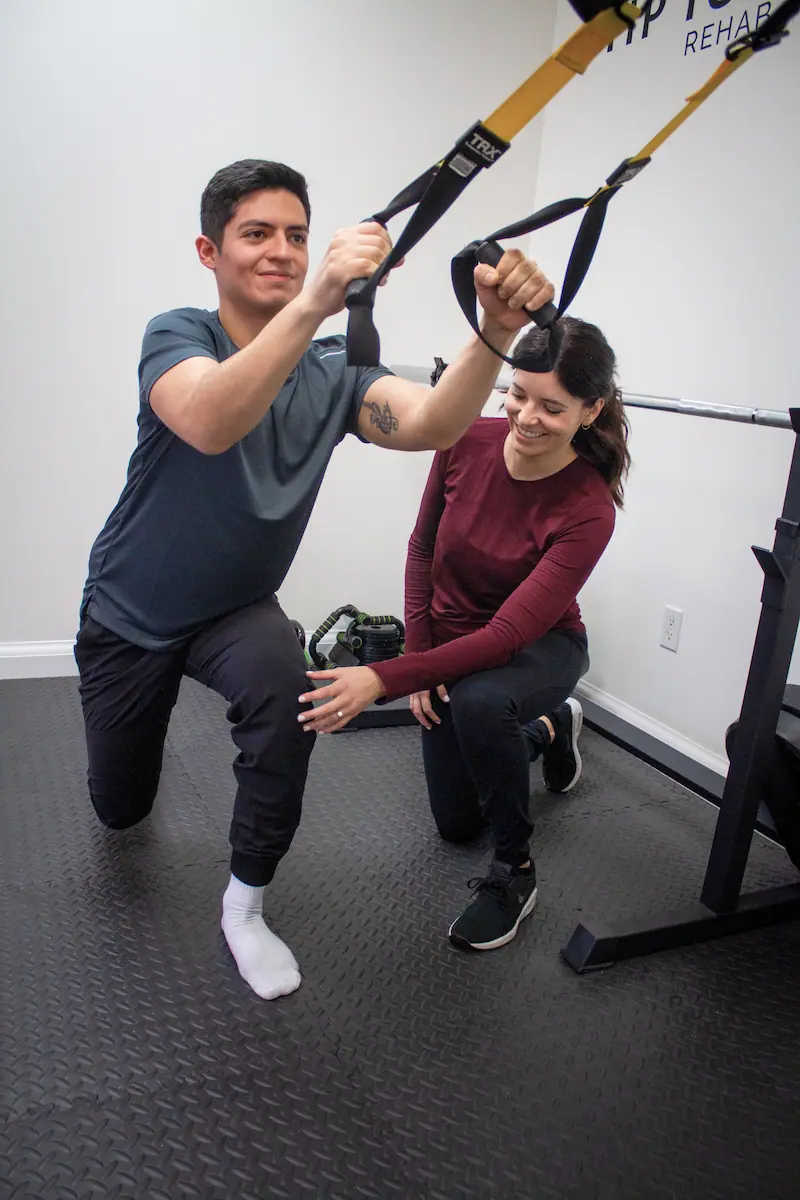
- Proactive check-ins around movement, tension, and recovery
- One-on-one care with Dr. Natalie Lopez
- Visit cadence based on your activity, goals, and symptoms
- Book only when it makes sense for your body
Why Active Adults Book Proactive Check-Ins
Training Load
When mileage, gym volume, sport seasons, or work demands change, a check-in can help you understand how your body is adapting.
Recovery Patterns
If one area keeps feeling tight, slow to warm up, or slower to recover, Dr. Natalie can assess what is showing up.
Movement Awareness
A proactive visit gives you a clearer read on mobility, muscle tension, and what may need more attention in your routine.
Practical Adjustments
You can leave with simple advice around pacing, recovery, and when it may make sense to book again.
Runners, golfers, tennis players, and gym-goers all load the body in repeating ways. Running adds mileage, golf rotates hard through one side of the body, and tennis loads the shoulder, lower back, and hip in patterns that build up over time.
None of that is bad. But the body adapts quietly, and it does not always announce what is changing. A hip starts to feel tighter than it used to. A shoulder takes longer to warm up. A lower back feels stiffer the morning after a long run. These are signals, not injuries.
The value is awareness. Catching a small change in movement or tension earlier can help you make better decisions about training, pacing, rest, and when to get assessed.
What Does a Proactive Chiropractic Visit Include
A proactive visit is built around what you are feeling that day. Dr. Natalie adapts each visit based on your symptoms, your training, and what she finds during the assessment.
If something hurts or has changed since your last visit, the visit starts there instead.
Your check-in may include
- A mobility assessment to see how your joints and spine are moving
- Soft tissue work on areas that feel tight or overworked
- Stretching or muscle release, especially in patterns that keep showing up
- Gentle joint movement when it is appropriate and you are comfortable with it
- A check on areas that feel restricted, fatigued, or slow to recover
- Simple advice for recovery or pacing
How Often Should Active Adults See a Chiropractor?
There is no fixed schedule. The right cadence depends on your activity level, your goals, and what is happening in your body right now.
If you are building mileage, returning to a sport, or noticing patterns that are not going away, more frequent check-ins might make sense for a while. If things are stable and you are feeling good, a check-in is welcome whenever you want one.
How Proactive Care Differs From Injury Care
Both visits start the same way. Dr. Natalie asks what is going on, assesses how you are moving, and decides with you what makes sense that day. The difference is the goal.
Injury or pain care is problem-focused. You come in with a specific complaint, and the work is built around resolving that complaint. Proactive care is check-in focused. You come in because you want a closer look at how your body is moving, recovering, and handling the load you are asking it to carry.
The hands-on work can overlap. A proactive visit might still include soft tissue work, mobility checks, and gentle joint movement. The framing is different. One is about resolving a problem. The other is about staying aware of how you are doing.
Can Proactive Chiropractic Care Prevent Injuries?
No one can promise injury prevention. Anyone who tells you chiropractic prevents injuries is overstating what it does.
What proactive care can offer is awareness. When you check in on movement, tension, and recovery earlier, you are more likely to notice small things before they become bigger things. A hip that has been feeling off for a few weeks is easier to assess than one that suddenly stops you mid-run. A shoulder that does not warm up the way it used to is easier to check before it starts limiting daily movement.
That awareness can help you make better decisions about training, pacing, and rest.
When to Book Sooner
Proactive care works best for one kind of visit. Some signs mean you should book sooner for a problem-focused visit instead.
If any of these are happening, Dr. Natalie will tell you what she finds and what makes sense as a next step, and will refer you to your doctor if something needs medical evaluation first.
Signs to pay attention to
- pain is getting worse or not settling down
- symptoms started after a fall, accident, or hard impact
- numbness, tingling, or weakness in an arm or leg
- headaches are changing, getting more frequent, or feel different than usual
- pain is starting to change how you train, sleep, work, or move through your day
No. Many active adults come in for periodic check-ins around movement, tension, and recovery. The decision depends on what is happening in your body and what you want from the visit. If you are not in pain and you are not asking the question, a regular check-in is probably not what you need.
It depends. Some active adults come every 4 to 6 weeks during a heavy training block, others every 1 to 3 months. If you are feeling good and moving well, you may not need a regular schedule at all. The right cadence is the one that fits your training, your goals, and what Dr. Natalie finds during visits.
No one can promise injury prevention. What proactive care can offer is earlier awareness of tension, mobility limits, and recovery changes, so you can make better decisions about training, pacing, and rest.
A proactive visit usually includes a mobility assessment, soft tissue work, stretching or muscle release, and gentle joint movement when appropriate. The exact mix depends on what you are feeling and what shows up during the assessment. Dr. Natalie adapts each visit to your body that day.
Both visits start with what you are feeling and what Dr. Natalie finds. The difference is the goal. Pain care is problem-focused. Proactive care is check-in focused on movement, tension, and recovery. The hands-on work can look similar.
Book a Visit With Dr. Natalie Lopez
If you are active in Oakville or Mississauga and want a closer look at movement, tension, or recovery, book a visit or start with a short consultation.